Spinning Tracing

ENG181.11 Fall 2019
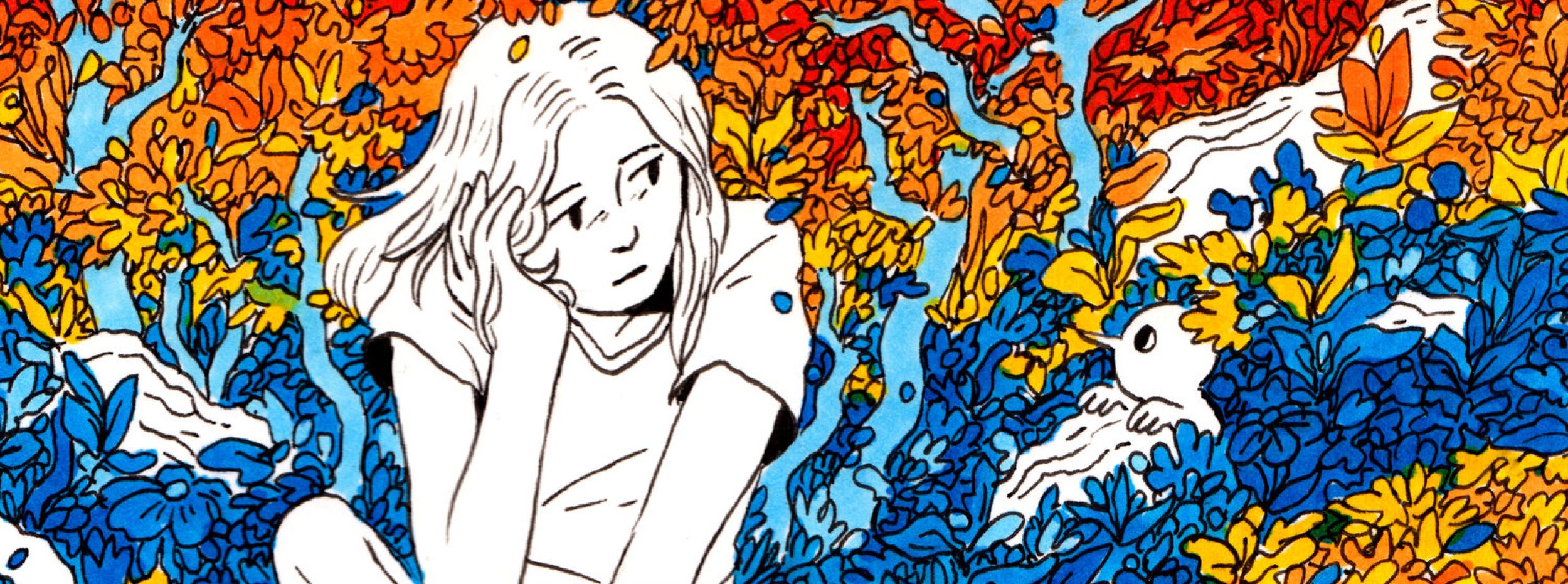
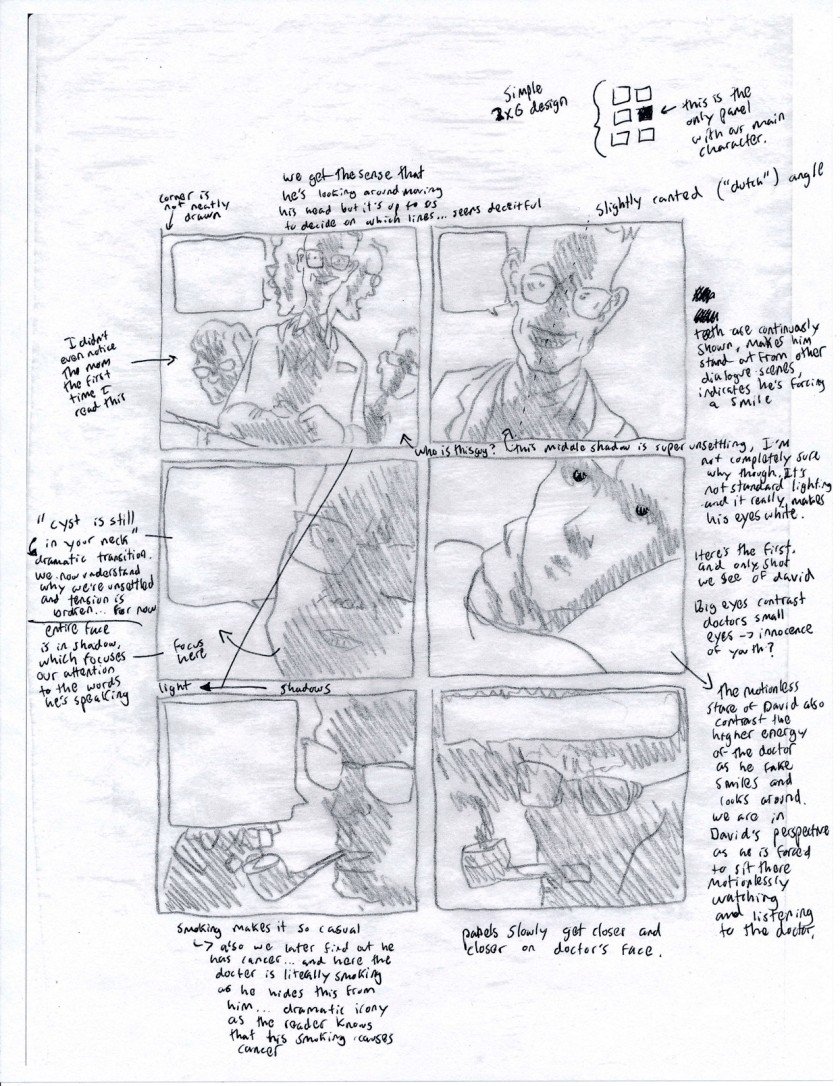
It was difficult to decide which pages to trace as I did not know what I should be looking for. Therefore, I marked three to four pages in each book that I found somehow unusual and interesting and read them carefully. I quickly decided the page for Spinning, in which a complete picture was intentionally divided into three panels, but I failed to find a similar one in Stitches. Albeit far from being able to articulate the special features in them, I eventually made my choices simply because of the special feelings I had when looking at these pages. As I would find out later, this selection process contributed to the development of my thesis that these two pages serve to let readers not read but feel the stories and also the title, “Read with Eyes, Feel with Heart“.

Despite previous careful examination, tracing definitely helped me figure out how both authors managed to confuse and overwhelm their readers and create feelings so that they could empathize with the protagonists through “choice of frame”. The comics’ “all-at-onceness” was in effect as well, as I tried to make visual connections between panels only to realize, after tracing them, that they were similar but depicted from different angles. As for the page from Spinning, before I traced it, I thought the three overlapping figures on the right of the page were observations at different times of a continuous movement, but from a fixed perspective. However, when I tried to imagine the movement in my head while tracing it, the sizes and distances of these figures did not match. Then I concluded that they were in fact observations at different times from different perspectives. The tracing process forced me to experience the uncomfortable feelings the authors designed for these pages and identify the reason behind at the end.
The inductive way of writing was hard at the beginning, like forcing a right-handed person to write with the left hand. I could not help but try to look for evidence to support my thesis. But what was my thesis? I had no idea at that time. With a vague idea about perspective in mind, I decided to analyze the two pages separately first. This approach turned out to be fruitful, as I soon identified the direction I should follow. Furthermore, the inductive way of writing shortened my time to write because I did not first commit to one thesis and then struggle to find evidence. And with all the evidence ready, there would be more room to develop interesting arguments.
 The biggest takeaway from this assignment is how versatile the comics is to influence readers. As Chute states in her book, Why Comics?: From Underground to Everywhere, “the comics gestures conspicuously to the reader’s active and involved reading”. Authors can use words, visuals, panels, and so forth to put their readers in the protagonists’ shoes. These elements work altogether to affect the readers, often unconsciously, through the special feelings they create. With the dizziness in mind, it becomes understandable that David runs away from school, break laws, and waste electricity just to annoy his parents. Tillie does not appear demanding when she is angry with her mother’s indifference after I have experienced the tough test with her. Appealing to emotion is more powerful than mere repetition to make the readers understand and accept the authors’ messages.
Assignment Link: https://eng181f19.davidmorgen.org/assignments/projects/tracing-pages/
Considering myself an insightful observer, I was at first pretty confident with my ability to “decode” all the patterns and underlying meanings in the two pages I chose even before the tracing process. However, I was proved wrong when I picked up my pen. When tracing, I noticed that although Stitches was monochrome, I had to carefully address the shading by stressing David’s eye sockets and nose with dark gray color while applying a lighter gray elsewhere. In contrast, I just needed to simply trace out the contour of the characters in Spinning without applying any shading. This distinction inspired me to explore how these different styles relate to the themes of the two texts, which later became the focus of my analysis.
I used to always think about the thesis of my essays before I start writing. For this assignment, though, I forced myself to jump right into the analyzing process built upon my annotations without worrying about what conclusion I was going to end up with. It turned out that I had a pretty hard time structuring my final paragraph because the former two paragraphs seemed to have nothing in common that I struggled to come up with a thesis that spoke for both. Surprisingly, I managed to not only identify the connection between them, but also arrive at an entirely new understanding of the different rhetorical situations two authors are in. If I had started writing with a fixed thesis at hand, I probably wouldn’t get to the exciting conclusion that I have right now.
This assignment definitely helped me explore more about the underlying meanings hidden within the visual elements in Stitches and Spinning. By looking over and over again at the two pages, I realized everything that appears in comics is an artistic choice that reflects the author’s thoughts. Small chose to make his panels distinctive since Stitches has a clear overarching theme of showing David’s trauma, whereas the images in Spinning are more ambiguous and require closer examination because Walden herself was trying to explore who she truly is and what the book is about while making the narration.
The assignment prompt for Tracing Pages requires the comparison of two visual close readings in analytical essay format. In my essay, I concluded from page 174 from Stitches and page 170 from Spinning that both authors use the panel to panel transitions and the presence and absence of facial expressions to compare themselves with their mothers. David Small stands up for himself in between surgeries in a staredown with his mother by imitating her vicious glare, and Tillie Walden closes herself off from her mother in an act of neglect when she is late to pick her up from cello practice and causes her to witness a scary car crash.
It was difficult to choose only one moment from each text to compare, so instead of searching for two pages that mimicked each other, I focused on each book separately. I chose a page I found interesting without worrying that I would need to compare it to another page later on. This method proved to be successful because once I began the tracing process I realized both pages had themes of facial expressions or lack thereof and interesting panel design. These themes made the inductive writing process easier, however, it was still uncomfortable considering I am unfamiliar with the writing style. Inductive writing forced me to push my critical analysis to the front rather than building up to it with a cushiony introduction. This made me feel exposed because I felt I hadn’t given enough background and would automatically be put in defensive positioning. It was also overwhelming to notice the sheer magnitude of meaning behind “the secret language of comics”. Each page of a comic book has seemingly endless possibilities for underlying meaning just based off of the panel transitions alone, not even what is inside the panels themselves! Before tracing my pages, I didn’t realize how much each author used frame angles and transitions to influence the consumption of a page. Now I can see how calculated each frame is in what the author choses to show or not show.
Forming my analyze of the two traced pages that I had annotated was a difficult process to take on. As I attempted to dive deeper into the meaning of certain patterns, I struggled for a little with developing a proper thesis that expanded the ideas I was witnessing on the pages. However, after much contemplation and deeper research on the “secret language of comics” I began to see a clear purpose emerging from the patterns I saw in Stitches and Spinning. After much thought, I knew that the authors’ experimentation with duration and motion and the use of specific images on the pages all lead to an underlying message of the protagonists being controlled by the fear in their lives. Small expanded on the duration of a moment to emphasize the specific detail of the fetus in order to relate his growth to an unknown terror that was beginning to control his life. He used his images to highlight the elements and expressions that lead to this conclusion. In contrast, Walden demonstrated the layering of motion and use of void images to present the idea to the audience that she is merely going through the motions of figure skating because of the fear she has of a life without it.
The process of annotating my traced pages allowed me to obtain a better understanding of the details I was privy to and those that were intentionally left out. By annotating these works I could take a closer look at the meanings behind each frame, angle, and perspective that the authors were sharing with us through their drawings. Obtaining this deeper understanding made the inductive essay much more manageable to form. I changed my writing process by jumping straight into my observations and arguments while considering what these patterns were really hinting to in the back of my mind. It took me a pretty long time to write this three paragraphs because I continued to stop and take multiple steps back in order to recognize the bigger picture at hand.
Ultimately, this assignment definitely provided me with an understanding of comics that I had never gotten before. I can now confidently say that Stitches and Spinning are much clearer after writing my analyze and diving into the patterns used by these authors. My biggest insight from this project is the hidden layer of deep emotion that drives both narratives. It had been clear that the ideas in these books were much deeper than just the surface, but being able to recognize the patterns set in place to demonstrate the unspoken feelings of the characters was a very pleasing thing for me to discover. Both the assignment prompt and my analyze of the annotated pages can be useful for more insight into a more meaningful understanding of these comics.

Once you have completed your Tracing project and published the pages to your site, you need to publish a reflection post as well. The post serves to turn the project in when it syndicates to the class site, and is also an opportunity for you to explain your process in the work you just completed.
Your reflection post should link to the main page for your project and also to the assignment prompt. Tell us in the post what the thesis of your essay is and give a one or two sentence preview of your argument.
You should also address the following questions:
Tasked with analyzing two pages from David Small’s “Stitches” and Tillie Walden’s “Spinning” and a deadline to boot, my most mournful reflection is that I incorrectly assessed the due date to be a whole 24 hours earlier than it was; as such, my loss of sleep is a slightly less-noble sacrifice than I previously assumed.
At first I thought I was going to have trouble meeting the minimum word-count, but I was pleasantly surprised to find that I actually had more than enough sentences to supplement my essay. The issue I had came instead from cutting down and streamlining my muddle of wordy words to fit the word maximum. I will admit though that this problem is a decidedly more helpful “hindrance” than not having enough, for when you’re forced to trim the fat, what’s left is only grade-A meat (I hope!).
Tracing out the pages helped me realize a lot more about the techniques inside each page and appreciate the work a graphic novelist puts into planning and preparation for their final production. Moreover, the sheer multitude of possibilities one faces when plotting out a page is both astonishing and exciting, so I guess something should be said for the wonderment that comes from a blank sheet of paper. What an endless array of opportunities!

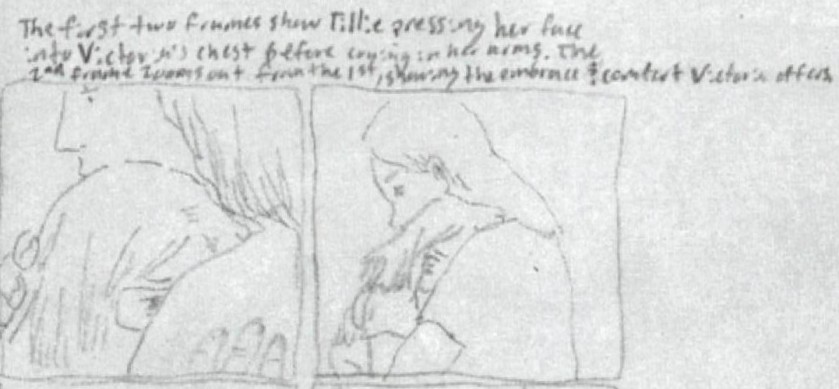
David Small and Tillie Walden’s memoirs reveal defining moments from their childhoods, such as their findings of emotional support and avenues of self-expression outside of the bounds of their families. Small’s “Stitches” contains a page of three panels showing his younger self hugging the leg of his psychologist for comfort. David’s parents were not prone to physically embracing their children, and as such, this moment presents a critical turning point for the young cancer survivor as he finally allows himself to cry over the situation his parents placed him in (for it was his father who gave him cancer, and both chose to hold off on their son’s surgery) as well as find a parental surrogate in the form of his psychologist. The zoom in over the three frames as well as the constancy of David’s image in the first two frames — which changes with a solitary teardrop in the third — ensure that readers take a notice of importance to this transformation, for this is the moment that begins Small’s eventual rise over the trauma of his childhood. Walden’s mother in “Spinning” also offers little to her daughter in the form of compassion when she finds out Tillie is homosexual, and as such the hug between Walden and her cello teacher, Victoria, is similarly critical; since the crux of Walden’s moment lies not in Tillie’s tears and expression of emotion (for young Tillie cries at multiple points, unlike David in his memoir), the framing of five panels keeps both Tillie and her teacher’s faces in view (though Walden’s is more clearly shown so readers see the emotion she is expressing to Victoria), as the object of this page is to demonstrate Tillie finding an individual she can connect with and be comforted by. The tears of the second and sixth panels are only shown in medium shots to grant importance to their embrace, which is shown initially in the first panel’s closeup.
The overall contextual patterns of the two memoirs help illustrate why Small chose to use a large, two-thirds-of-a-page filling panel to illustrate his moment of expression as opposed to Walden’s decision to use six evenly-sized panels to portray hers. Small structured his memoir so that each “part” of the graphic novel (as divided and distinguished by “I was…” titles and full-page illustrations) has a clear critical point of his story he wishes to convey; for instance, the first “part” presents the aggressive forms of expression his family possesses in contrast to his expression through sickness. As such, Small presents a large closeup of David’s tear — which is then followed by multiple panels displaying a metaphorical rain representing his resulting outflow of expression and acceptance — to clearly communicate to readers the monumental turning point this moment entails. The “climax” of “Spinning” when Tillie decides to finally quit skating, is purposefully given a display lacking dramatization to correspond with her mother’s uncaring reception of the news. Hilary Chute declares in “Why Comics?” that “auteurist comics … offer the singular intimacy of one person’s vision of the world,” and Walden, in designing her memoir, showcases her own subjective reflection of events by presenting a tale with less clear story beats, which are in tune with young Tillie’s lack of certainty and indecision throughout the graphic novel. As such, her hug with Victoria is presented through evenly sized shots that aim at showing not a singular point of transformation, but rather her appreciation for a common (yet until then, not acquired) display of affection she yearned for, which, along with other moments, helped her grow and eventually decide to quit ice skating.
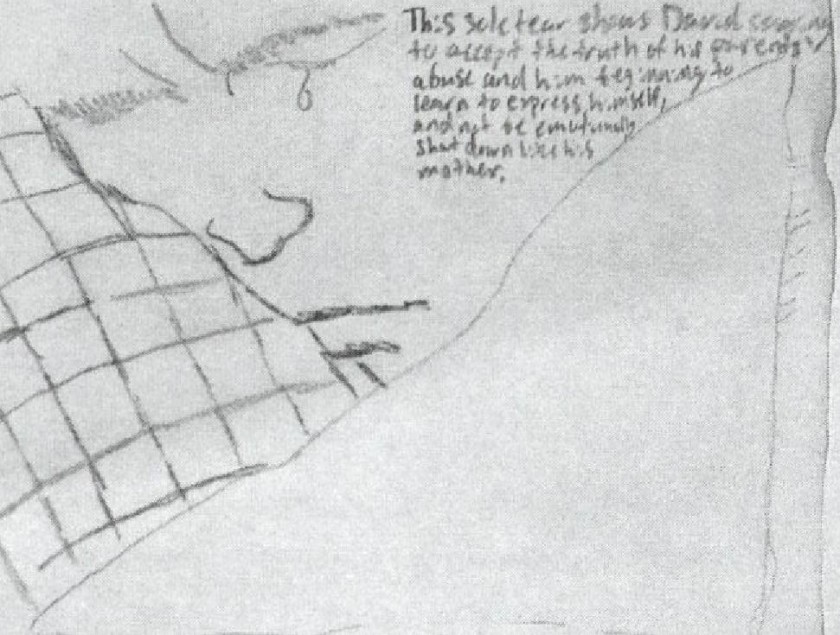
“Stitches” and “Spinning” portray moments of emotional expression and comforting embrace, and Small’s memoir emphasizes the prior while Walden’s, the later. There is an overarching theme of self-expression in Small’s story, with David’s progress largely marked by finding healthy means of working out and conveying how he feels despite losing his voice. Hence, Small creates frames that present closeups of David’s face, excluding that of his psychologist, so that readers may focus on the eventual tear which is critical to the main character’s arc and transition into obtaining positive gains. Along with agency, Tillie gains critical friends in “Spinning” which help comfort her and positively propel her forward. As such, Walden chooses to keep both Tillie and Victoria in frame throughout most of the page, as well sizing the panels so they represent a “regular” yet priceless moment of care which she longed for.
Bibliography:
Chute, Hilary. Why Comics?: From Underground to Everywhere. Harper Collins, 2019
Small, David. Stitches: a Memoir. W. W. Norton & Company, 2013.
Walden, Tillie. Spinning. First Second, 2017.