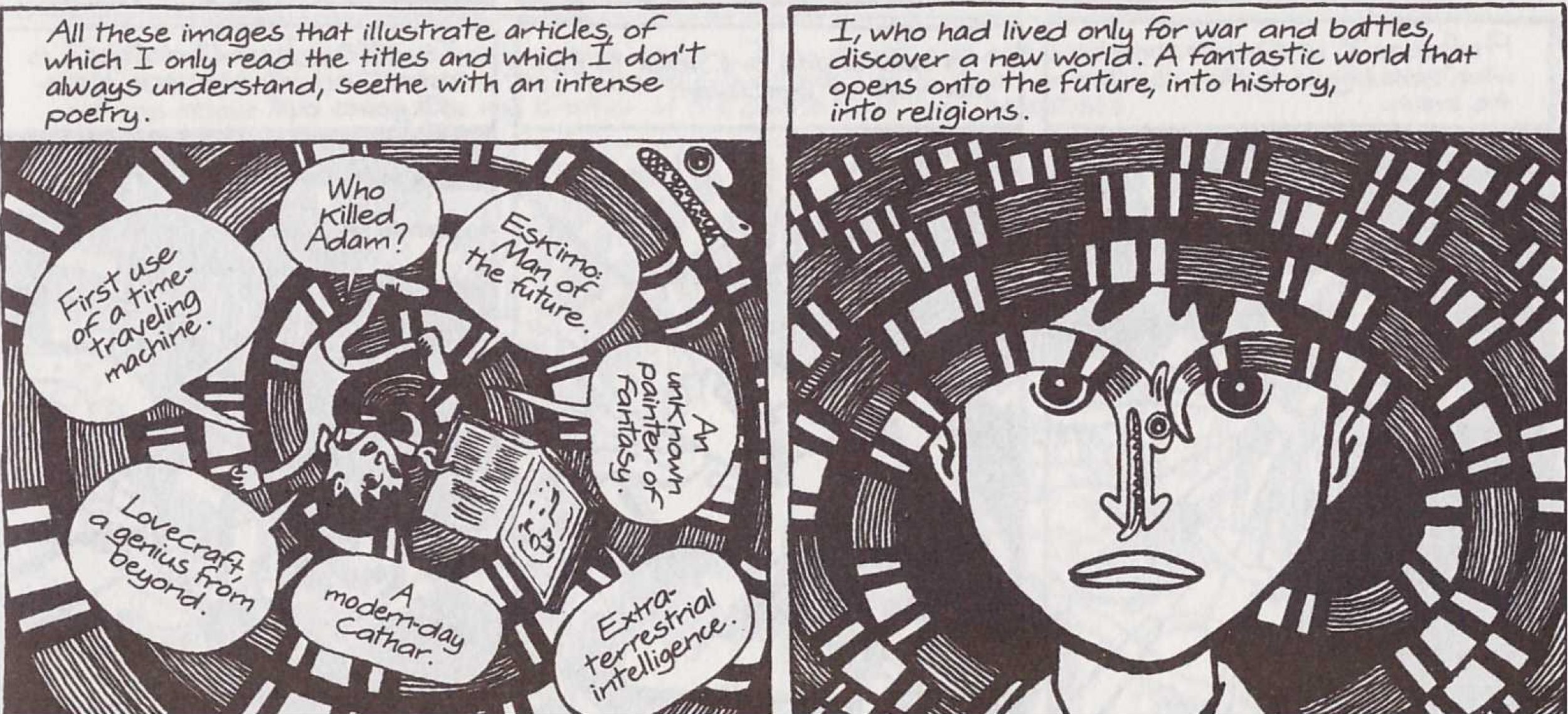
The Secret Language of Comics: Visual Thinking and Writing

Sawyer Steinmiller’s Avatar Post

My avatar is a very flattering picture of one of my friends, Alyssa. I made her my avatar because she took 200 pictures of herself on my phone during lunch one day and I thought a beautiful photo of her would be a fair way of revenge. Surrounding Alyssa are various photos of my dogs! My dogs are in my avatar because I miss them dearly and they were an integral part of my life back in Washington DC. One of my dogs’ name is Dobby- he is the black one. Dobby is super friendly and smart, but extremely loud. He barks at the door whenever anyone makes a noise. Biggie is the bigger of the remaining two dirty blonde dogs. He is super shy to strangers, but is a great cuddle buddy to family. Welby is the third dog. We rescued her from hurricane Harvey, and she has suffered many hardships because of the storm. She is blind, deaf, cannot make noise and cannot go up steps. Therefore, she is stuck in one room all day unless we move her.

Making my avatar was not hard at all. Even though I have never edited a photo before, the instructions were super clear to me and I had my friends around me while I made it- this made the process extremely fun. In terms of content, I tried to make the subjects of my avatar as lighthearted as possible, hence why I chose friends and dogs as the theme. I wanted to make my avatar lighthearted because that is the theme that I am trying to relay through my comics and blog. I have previewed the novels that we will be reading in class, and they all seem to address the depression and sadness in the authors’ lives. I am a poet, and I am used to expressing my negative energy and ranting about my issues through poems, but I have never used any creative outlet to show what brings me joy in life. I want to use the medium of this blog and comics to show who and what makes me happy!

My Avatar

My avatar is a watercolor painting that I made with my name at the bottom. My painting is of a sunset over the water, because I feel that looking at a sunset is very calming. I chose this as my avatar because our English class focuses on comics, in which art is used to tell a story. I painted this while I was evacuated during Hurricane Irma last year. My family and I had stuffed our valuable items into the trunk of our car before driving to Alabama. I was glad that my family would be safe but I couldn’t help worrying what our city would look like when we got back. I was in a hotel room and since all of my assignments had been cancelled due to the hurricane, I decided to paint this. Even though this scene looks nothing like that of my hometown, this served as a reminder of the serenity of the past. Thus, while this may seem like any painting of a sunset, there may be more meaning to this painting than what meets the eye. Similarly, in comics, pictures drawn may appear to give clear and accurate depictions of situations. However, as we have learned, when comics are analyzed, deeper meanings can be uncovered and artistic and stylistic elements that shape the story can be uncovered. 

I feel that my avatar gives insight into who I am because it shows that I love creating art, and it  provides an abstract depiction of an event from my life. Additionally, due to the focus on comics within our class, my avatar connects to a topic from our class.

My Avatar

My Avatar Design

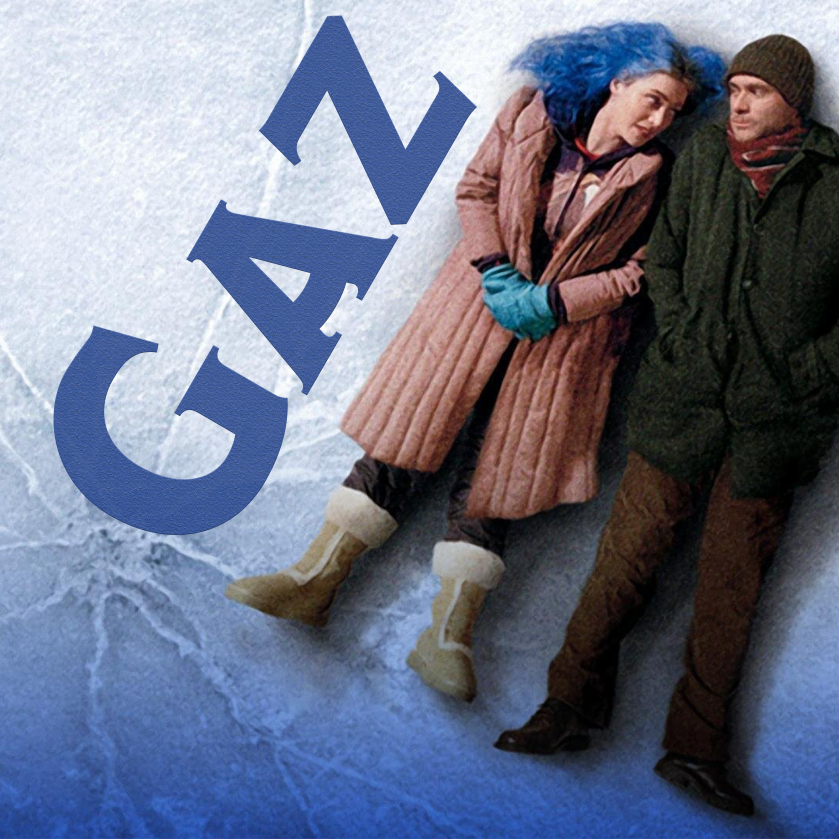
My avatar is a shot from one of my favorite films, Eternal Sunshine of the Spotless Mind (written by Charlie Kaufman), with a text overlay of the nickname “Gaz” as some refer to me as. For the record, you are welcome to call me Isaac OR Gaz. I will respond to either. “Gaz” is a shortened name my grandfather, other, and brother used in school from our last name “Gazmararian.”

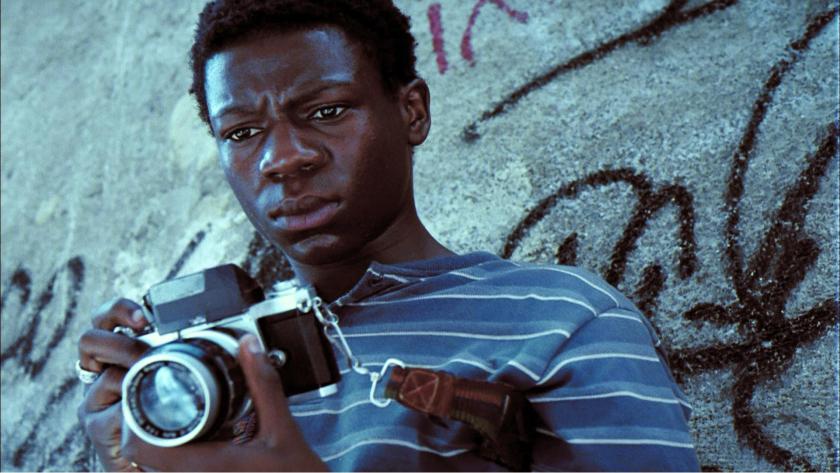
The process of designing an avatar was surprisingly hard for me. I knew it would include something related to film, as that is a big passion of mine, but I struggled picking any specific film because I love so many of them. Initially, I worked on combining an image of the black hole from the film Interstellar with the image from the film City of God, as both films are two of my favorite movies, are from completely different genres, and relate to my other passion for space. However, I struggled with the layout of the images and how to best overlay/crossfade them, which eventually led me to simplify my design and settle on the image from Eternal Sunshine.

Interstellar (2014)
City of God (2002)

For those who don’t know, Eternal Sunshine of the Spotless Mind is a film about a two people who decide to erase all memories of the other from their own minds after they break up. The film flows in and out of reality and memories as events bleed into each other and the protagonist (played by Jim Carrey) questions whether or not he wants to finish the memory-wiping procedure. While the story seems fantastical, the film hits on some ruthlessly real emotions. It deals with the breaking down of the idealization of a romantic partner, how people change in relationships, how all-consuming romantic relationships can be, and much much more. I love the film for its realistic portrayal of human emotions which can’t be cleanly categorized. There are only two films in my life that have helped me through romantic break-ups, the movie Her by Spike Jonze and Eternal Sunshine. Both films share a certain level of humility and vulnerability that I find lacking in other “romantic” films. The film also has beautiful cinematography, which smoothly moves the viewer through memories (sometimes in one shot!). That type of lucid cinematography is something I have learned from and attempt to apply it to my own short films. The film is also written by my favorite writer of all time, Charlie Kaufman (writer of Adaptation, Being John Malkovich, Synecdoche, New York, Anamolisa, etc.), who consistently crafts wholly unique films with an odd sense of structure, pacing, and character which I cannot find nowhere else. Kaufman’s films almost feel like a character itself.

Suffice to say that this film has impacted me many ways, as a person, a cinematographer, and a writer. There are few out there like it. I initially chose to slant the text because I thought it would look cool, but now the more I think about it, I like how it almost feels like the name “Gaz” is laying down next to Clementine and Joel, as if I am part of the film.

Blessed are the forgetful: for they get the better even of their blunders.” – Mary Svevo, Eternal Sunshine of the Spotless MindFriedrich Nietzsche

images: https://img.maximummedia.ie/joe_ie/eyJkYXRhIjoie1widXJsXCI6XCJodHRwOlxcXC9cXFwvbWVkaWEtam9lLm1heGltdW1tZWRpYS5pZS5zMy5hbWF6b25hd3MuY29tXFxcL3dwLWNvbnRlbnRcXFwvdXBsb2Fkc1xcXC8yMDE2XFxcLzAyXFxcLzE2MTYzMzA0XFxcL2V0ZXJuMS0xMDI0eDU3Ni5qcGdcIixcIndpZHRoXCI6NzY3LFwiaGVpZ2h0XCI6NDMxLFwiZGVmYXVsdFwiOlwiaHR0cHM6XFxcL1xcXC93d3cuam9lLmllXFxcL2Fzc2V0c1xcXC9pbWFnZXNcXFwvam9lXFxcL25vLWltYWdlLnBuZz9pZD00M2JjYTlkZTdlYjI2OTczN2EwZlwiLFwib3B0aW9uc1wiOltdfSIsImhhc2giOiI2MmQ1MTQ0MTk1YTFiYjVkOWU2OGFlNjA5ZDcxYjlmYzRjMDQ3ZTU0In0=/etern1-1024×576.jpg


X-Page Exercises: Reading and/or Writing

View Post

Think back over the course of your life so far and make a list of ten memories that you associate with reading and/or writing. Just take about 3 minutes and make a numbered list of ten memories that come to mind.

Then, read over your list and pick the one memory that seems the most vivid to you. Circle it. Then on a new page, write that memory at the top of the page as if it were the title of a story and draw a big X across the page.

Picture yourself in the memory that you are exploring and then write the answers to the following questions anywhere on the page. Pretend we are having a conversation, so you can see the image but I can’t so I’m going to be asking you these questions to help me “see” the image too. Keep writing until the next question is asked — no detail is too small or unimportant.

  1. Where are you?
  2. What time of day or night does it seem to be?
  3. What season does it seem to be?
  4. Where is the light coming from?
  5. What kind of light is it?
  6. What’s the temperature like?
  7. What does the air smell like?
  8. What are you doing?
  9. Is there anyone else in that place with you?
  10. What are they doing?
  11. Why are you there?
  12. What are some of the sounds you can hear?
  13. What are some of the things you can see?
  14. What’s directly in front of you?
  15. If you turn your head to your right, what’s there?
  16. If you turn your head to the left, what do you see?
  17. What is behind you?
  18. What’s below you and around your feet?
  19. What’s above your head?
  20. What emotions are you feeling in this space?

Once you have jotted answers to those 20 questions on your x-page turn to a new page and freewrite for 5 or 10 minutes about that memory. There are no wrong or right things to write about or ways to write about the memory. Just write without stopping whatever thoughts are coming to your head about that memory.

We did this exercise in class with one memory. As preparation for writing your literacy narrative essays for next week, choose the next two most vivid memories from your list and make an X-page and freewrite for each.

(adapted from Lynda Barry, Syllabus)

Week Ahead: 2

2 9/3 Andrea Lunsford, “Rhetorical Situations” and “Reading Rhetorically”from Everyone’s an Author

Allie Brosh, “Adventures in Depression, Part One” from Hyperbole and a Half.

Create WordPress site & read syllabus, comment on this post
9/5 Stitches — first 2/3rds of “I was six” (pages 8-63)
9/8 Sketch 1: Avatar

(Note: Most weeks, I’ll try to publish a post on Friday or over the weekend with a glimpse at what is coming up in the next week. Like I have done above, I’ll start with repeating the information on our official schedule for the next week, then like I do below, I’ll often write a little bit more detail about what we’ll focus on in class or what you need to be thinking about and preparing for.)

We had our first class meeting yesterday and you got an introduction to the class. Before we meet again on Tuesday, you should create your WordPress site and complete the other homework I gave you on Thursday.

In class on Tuesday, we will have four major tasks to complete:

  • further discuss the syllabus and expectations for this class (yours and mine) and answer any questions you might still have
  • discuss the terms laid out by Andrea Lunsford, especially focusing on the terms associated with “rhetorical situation,” which we’ll be relying on all semester
  • discuss “Adventures in Depression, Part One.” Think about the relationship between the words (both the blocks of text in between comic panels and the words within the panels) and the images. How would you describe the tone of her comic? What is Allie Brosh’s rhetorical situation? Try to identify the genre, audience, purpose, design, stance, and context. (The medium for “Adventures in Depression, Part One” is comics, webcomic more specifically, so don’t call the genre “comic.” We’ll eventually get to talk about medium versus genre further, and why comics is a medium not a genre.)
  • an in-class writing exercise designed to help you get started with thinking about your literacy narrative, which will be due in week 3

On Thursday, we’ll spend the bulk of our time discussing the opening section of Stitches. As you read those first 50ish pages I would like you to consider the following questions:

  • How does Small establish character and setting in the first handful of pages?
  • This chapter all takes place while David is 6 years old. What are the major subdivisions of the chapter though? You’ll probably decide that there are three (maybe four) major sections in these pages — what is the primary idea being conveyed by each section?
  • Pick the single page that you find the most compelling or interesting or that you think is the most important in today’s reading. Describe the page in a few sentences. Why is it interesting or important?

Also in class on Thursday, we’ll discus the first Sunday Sketch assignment, as you’ll be creating your square avatar images by Sunday and go over any initial questions you have about your WordPress sites.

My Avatar

Avatar2

My avatar is a combination of the bat symbol and Gotham’s silhouette, resembling a searchlight that shines into the dark sky. Batman has been one of my favorite superheroes since my childhood. After I grew up, I found the philosophical meanings behind the stories very interesting. They pose serious questions on human nature and the concept of justice.

Despite the multi-universe setting of the Batman series, the character of Batman always has multiple facets – a crazy rich, blithe playboy during daylight, an invincible superhero ruthless to villains, but also a soft and melancholy soul due to his traumatic childhood. Like most kids, I was first fascinated by his physical prowess and his dedication to justice. Being one of the few superheroes that do not have inherent superhuman powers further excited my admiration. Back then, Batman was perfect in my mind. However, with the timeline of Batman’s life rolling out through various productions, such as comics, films, and video games, Batman became less a hero or an idol to me, but more a concrete human being. As my age grew, I started to understand and empathize with the conflicts inside him. These conflicts are the philosophical questions that people have been trying to answer for thousands of years – about family, society, justice, and the best approach to it.

The combination of the bat symbol and Gotham’s silhouette reflects a philosophical thought I hold – the world is about balance. Gotham was founded to buttress more wealth and supposedly a better life, but too much wealth eventually led to corruptions and crimes. Excessive evil then contributed to the emergence of Batman (Bruce Wayne created the Batman persona and committed to justice after he witnessed the murder of his parents.) and his allies like James Gordon to balance out itself. On the other hand, the superior power of Batman was more than enough for mobs and corrupted police, resulting in the appearance of super-villains like the Joker and Mr. Bloom. These super-villains do not focus on material benefits but commit crimes because of their pessimism towards human nature, the antithesis of Batman’s belief in good humanity and justice. Batman and the Gotham City shaped each other and cannot be separated. As said by an ancient Chinese philosopher, harmony, or a more modern word, sustainability, is the balance point between good and evil. 

“Where there is darkness, light.”


Image Source:

https://www.needpix.com/photo/924829/batman-gotham-city-night-guardian-darknight-yellow-batman-logo-city-lights-night-wallpaper

Welcome to The Secret Language of Comics

Welcome to ENG101 (section 11), The Secret Language of Comics: Visual Thinking and Writing.

I look forward to working with you this semester.

Your homework to complete before we meet again on Tuesday, September 3:

  • Read over this website very carefully as it constitutes the syllabus for this course. Note that the Syllabus page includes a number of subpages, covering such topics as: how to contact me; the course learning outcomes; the texts you need to buy; attendance, participation, and other policies; and how you will be graded. There is also a calendar of readings and assignments; and posts describing the three major assignments (literacy narrative in three parts, tracing pages, and halfa kucha) and minor assignments this semester.
  • Add this site to your bookmarks. Make certain that you can find your way back here, because you’ll be spending a lot of time visiting these pages over the course of this semester.
  • Sign up for a basic, free WordPress site. (See further information below about choosing a name for your site.) Note: If you already own a domain and server space, come talk to me to determine whether you can use that instead of creating a site on WordPress.com.
  • Leave a comment on this post asking a question about the syllabus. Put the URL for the WordPress site you created in the “website” line on the comment form. If you want to receive an email every time a new post goes up on this site, check the “Subscribe to site” box before you submit your comment.
  • Reply to this survey form, which both asks some basic information I’ll need in order to manage communications with you and also asks some questions that will help me get to know you a little bit better.
  • Read the following two texts: Andrea Lunsford, “Rhetorical Situations” and “Reading Rhetorically” from Everyone’s an Author and Allie Brosh, “Adventures in Depression, Part One” from Hyperbole and a Half. (Note that first link will take you to the PDF that I’ve uploaded to our electronic course reserves, so you will need to login with your Emory netid and password to access the document. The second link goes to Hyperbole and a Half on blogger. Allie Brosh has since published the story in her book, Hyperbole and a Half, which is excellent, but we can use this version on the web for this course.)

A little more on naming your WordPress site

You can choose a URL based on some version of your name (i.e., janestudent.wordpress.com or johndoe.wordpress.com) if you’d like. Using a version of your name has the advantage that you will be building a digital identity on the web based on your name, which can be really helpful. On the other hand, it also means that this site that you’re building will likely come up near the top of web searches for your name, so consider whether that is something you would like.

If you don’t want to publish your coursework on a site with a version of your name, you can also use some sort of pseudonym for your domain name.

It is also perfectly acceptable for your domain name to be a short word or phrase that is easy to remember and spell, and which speaks to some interest of yours or an aspect of your character (for example: my friend Audrey Watters, a noted educational technology scholar and researcher publishes a site called hackeducation.com; Tanine Allison, a professor of Media Studies here at Emory who just published her first book entitled Destructive Sublime: World War II in American Media, uses destructivesublime.com as her domain name; or one of my favorite art and design blogs is called thisiscolossal.com). If you’re going to choose a title or phrase as your domain name, make sure you think about it very carefully so you don’t show up on one of those lists of the most unfortunate domain names ever, like the design firm called Speed of Art that ended up with a domain name that sounds like it’s about flatulence in a swimsuit. Note that in the case of your site, you’ll be publishing a page that’s a subdomain of WordPress.com, so if Audrey Watters were in this class her site might be called hackeducation.wordpress.com.

Sketch 1: Avatar

Due: 9/9

Tag: sk1

Objectives:

  • Very basic photo editing
  • Introduction to the concept of Creative Commons
  • Uploading and publishing to your new WordPress site
  • Visual images as representations of complex conceptual topics

Avatar

Once you’ve created your web site, you need an image to represent yourself and/or your site for the class: an avatar. Your avatar can be whatever you want it be but try to create something that both reflects your personality and speaks to the topic for this class in some way.

Start by choosing one or more of your own photos as the basis of the avatar, drawing something yourself and scanning it, or finding one or more CC-licensed images on Flickr that you can modify. Make certain to keep a note for yourself of the URL for the photos you use if they are not your own.

Crop and otherwise edit the photo(s) in a photo editing application (like Photoshop or PicMonkey or Pixlr). You can create a layered or collage effect, if you’d like. Add your name on your badge in such a way that it’s legible — it can be your full name, just your first name, or the nickname you want to be called this semester.

Your final badge should be square and at least 512 pixels wide and high. Please make certain your badge is square so that it will fit into the design on the student sites page.

Publish

When you’re done, you’ll need to put the image two places, with an optional third:

First

Load the badge into your Media Library and publish it to your site in a blog post. (If adding it as a feature image means that the entire square image won’t display, then also insert the image into the post itself.)

Image showing where to add tags and a feature image

Include information and links in the post about the source(s) for images included in your badge.

Write a paragraph or two about why you chose those images, what aspects of yourself and your interests are represented in your badge, and/or what difficulties you faced in creating the badge.

Please tag your post with the tag “sk1,” plus with any additional tags that you think are appropriate.

Second

Go into your dashboard to Appearance > Customize > Site Identity. Load the image as your site icon.

Finally

If you do not already have a gravatar, create a gravatar account and load your avatar there. From then on, your avatar will show up as your picture when you leave comments here and on other students’ sites.

Sketch 2: Sunday Sketches

Due: 9/15
Tag: sk2

Christoph Niemann is an illustrator, artist, and author whose work regularly appears in the New York Times, the New Yorker, and elsewhere. He’s got a mixed media series that he calls “Sunday Sketches,” in which he takes some object from his surroundings and creates a sketch on the page around it. Some of the best such works he’s included in his book entitled Sunday Sketching.

Some examples from Niemann’s Tumblr:

You can see that each of these pieces is an actual three-dimensional tangible object placed into a drawing on paper to transform that object into something new. Niemann then photographs the resulting sketch to create a two-dimensional artifact.

For your third sketch assignment, I want you to create your own Sunday sketch in a similar style.

  • Take a picture of your sketch and publish it as a post.
  • Give your post a funny or witty title.
  • Write a paragraph or two in which you explain the process whereby you came up with the idea for your Sunday sketch and the choices you made in realizing that idea as an actual sketch.
  • Include a link back to this prompt and tag it “sk2
css.php